Guest Posting: The Complete Guide
Last updated: August 29, 2026
Table of Contents
- What Is Guest Posting?
- Why Guest Posting Still Matters in 2026
- How Guest Posting Works (Step by Step)
- Guest Posting for SEO: What the Data Shows
- Finding the Right Guest Posting Sites
- Guest Post Outreach That Gets Replies
- Writing Guest Posts That Get Accepted
- Guest Posting vs. Guest Blogging: Is There a Difference?
- Guest Post Exchanges: A Smarter Model
- Guest Posting Services: What to Look For
- Free Guest Posting: How to Build Links Without a Budget
- Common Guest Posting Mistakes (and How to Avoid Them)
- Is Guest Posting Safe? Addressing Google’s Guidelines
- Understanding Guest Post Pricing
- The Future of Guest Posting
- Key Takeaways
Guest posting remains one of the most effective strategies for building high-quality backlinks, establishing authority, and driving targeted traffic to your website. But the landscape has changed dramatically. The days of mass-producing low-quality articles and scattering them across random blogs are over. In 2026, successful guest posting requires strategy, genuine value, and the right platforms.
This guide covers everything you need to know about guest posting — from finding the right sites and crafting winning pitches to understanding the SEO impact and avoiding penalties. Whether you are a beginner looking to publish your first guest post or a seasoned marketer refining your approach, you will find actionable insights throughout.
What Is Guest Posting?
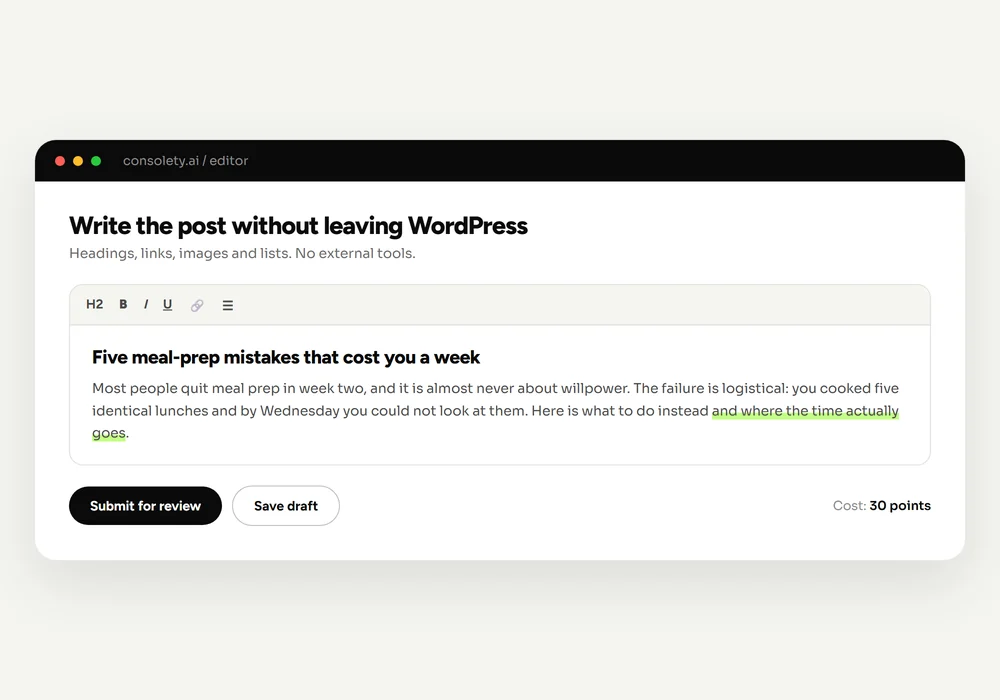
Guest posting (also called guest blogging) is the practice of writing and publishing an article on someone else’s website or blog. The arrangement benefits both parties: the host site receives free, high-quality content for their audience, and the guest author gains exposure, credibility, and typically one or more backlinks to their own website.
At its core, guest posting is a content collaboration. You bring your expertise to a new audience, and in return, you earn recognition and links that signal trust to search engines. It is one of the oldest and most reliable link-building tactics in SEO — and for good reason.
How Guest Posting Differs from Sponsored Posts
It is important to distinguish guest posting from paid or sponsored content. A genuine guest post is an editorial contribution where the author provides value to the host site’s readership. Sponsored posts, on the other hand, involve payment for placement and should be marked with rel="sponsored" or rel="nofollow" tags according to Google’s guidelines.
The distinction matters because search engines evaluate links differently based on context. Links earned through genuine editorial contributions carry more weight than those that are purchased. This is why authentic guest posting continues to be a core strategy in any serious guest posting SEO campaign.
Why Guest Posting Still Matters in 2026
Every year, someone declares guest posting dead. And every year, it continues to be one of the most effective strategies in digital marketing. Here is why it persists:
1. Backlinks Remain a Top Ranking Factor
Google’s algorithm uses hundreds of signals, but backlinks from authoritative, relevant websites remain among the most powerful. Guest posting provides a direct, scalable way to earn these links through genuine content contributions rather than manipulation.
2. Brand Authority and Thought Leadership
When your insights appear on respected industry publications, it positions you as an expert. Readers who encounter your name across multiple authoritative sites begin to trust your brand before they ever visit your website.
3. Referral Traffic That Converts
Unlike random link-building schemes, guest posts on relevant sites drive qualified traffic. A reader who clicks through from a well-written guest article on a related blog is far more likely to convert than someone arriving from an irrelevant source.
4. Relationship Building
Guest posting opens doors. The editors and site owners you work with become professional connections. These relationships often lead to additional opportunities: joint ventures, podcast appearances, co-marketing campaigns, and ongoing content collaborations.
5. Indexing and Discovery
New websites and fresh content pages often struggle with discovery. Guest posting on established sites creates pathways for search engine crawlers to find and index your content faster.
How Guest Posting Works (Step by Step)
If you have never published a guest post before, the process can seem intimidating. But the core workflow is straightforward. Here is a complete walkthrough of how to guest post successfully:
Step 1: Define Your Goals
Before reaching out to any site, clarify what you want to achieve. Common guest posting goals include:
- SEO and link building: Earning dofollow backlinks from high-authority domains
- Brand awareness: Getting your name in front of a specific audience
- Referral traffic: Driving visitors to a landing page or resource
- Thought leadership: Establishing expertise in your niche
Your goals will determine which sites you target, what topics you pitch, and how you structure your author bio.
Step 2: Find Target Sites
The quality of sites you publish on directly impacts the value you receive. Look for sites that have genuine readership, relevant content, and reasonable domain authority. We cover this in detail in our guide to guest posting sites.
Step 3: Study the Site
Before pitching, spend time reading the target site. Understand their content style, audience level, preferred formats, and existing coverage gaps. The best guest post pitches reference specific articles and propose topics that fill a genuine content need.
Step 4: Craft Your Pitch
Your outreach email is the gatekeeper. A strong pitch is personalized, concise, and demonstrates that you understand the host site’s audience. We have created a complete guest post outreach template that breaks down exactly what works.
Step 5: Write the Article
Once your pitch is accepted, write the best article you can. Treat it with the same care you would give content on your own site — arguably more, since the editorial standards of the host site will determine whether your piece gets published.
Step 6: Submit and Follow Up
Submit your draft according to the site’s guidelines. Be responsive to editorial feedback. Once published, promote the article through your own channels — this adds value for the host site and strengthens the relationship.
Step 7: Track Results
Monitor the backlink in Google Search Console, track referral traffic in your analytics, and measure the impact on your target keyword rankings over time.
Guest Posting for SEO: What the Data Shows
Let us move past opinions and look at what the data tells us about guest posting for SEO.
Link Quality Over Quantity
Multiple studies, including research from Ahrefs and Moz, consistently show that a single backlink from a high-authority, topically relevant site outperforms dozens of links from low-quality directories or link farms. Guest posting, when done correctly, delivers exactly that type of high-quality link.
Topical Relevance Matters More Than DA
A link from a niche-relevant blog with a Domain Authority of 35 can outperform a link from an unrelated site with DA 70. Search engines evaluate links within topical context. A guest post on a site that covers your industry signals relevance in ways that raw authority metrics cannot capture.
The Compound Effect
Guest posting benefits compound over time. Each published article creates a permanent (or long-lasting) backlink, a piece of content that can rank in its own right, and a relationship that may yield future opportunities. A consistent guest posting strategy of 2-4 posts per month can transform a site’s backlink profile within 6-12 months.
Anchor Text Best Practices
When including links in your guest posts, follow these guidelines to stay within search engine guidelines:
- Use natural, descriptive anchor text that serves the reader
- Mix branded, generic, and long-tail anchors across your guest posting portfolio
- Never force exact-match keyword anchors — it looks manipulative
- Prioritize linking to genuinely useful resources (not just your homepage)
- Include 1-2 links to your site maximum per guest post
Finding the Right Guest Posting Sites
The sites you choose to guest post on will make or break your strategy. Here is how to identify quality targets and avoid wasting time on sites that will not move the needle.
What Makes a Good Guest Posting Site?
Look for these characteristics:
- Real readership: The site has genuine traffic, active comments, and social engagement
- Relevant content: The site covers topics related to your niche
- Editorial standards: The site reviews and edits submissions (this is a good sign)
- Clean link profile: The site is not a link farm disguised as a blog
- Active maintenance: Fresh content is published regularly
Red Flags to Avoid
- Sites that accept any topic regardless of relevance
- Pages labeled “write for us” that list pricing for link placements
- Sites with hundreds of guest posts but no original content
- Blogs where every article is a different niche (health, tech, finance, travel all mixed)
- Sites with no clear audience or business model beyond selling links
We maintain a curated list of quality guest posting sites organized by niche and authority level. For budget-conscious marketers, our guide to free guest posting sites highlights opportunities that do not require payment.
Where Traditional Outreach Falls Short
The traditional model of finding guest posting opportunities — Google search operators, manual outreach, waiting weeks for responses — is time-consuming and inefficient. Response rates for cold outreach emails typically hover around 5-10%, meaning you need to send hundreds of pitches to land a handful of placements.
This is exactly the problem that platforms like Consolety solve. Instead of cold-emailing strangers, you connect with site owners who are actively looking for quality guest content. Both parties benefit, the process is transparent, and placements happen in days rather than months.
Guest Post Outreach That Gets Replies
Even with the right targets identified, your outreach email determines whether you get a response. Here is what separates effective pitches from ones that get ignored.
The Anatomy of a Winning Pitch
Subject line: Keep it simple and specific. “Guest post pitch: [Topic Idea]” works better than clever or vague subject lines.
Opening: Reference something specific about the site. Mention a recent article, a content gap you noticed, or why their audience would benefit from your topic. This shows you have done your research.
The pitch: Propose 2-3 specific topic ideas with brief descriptions. Explain what angle you will take and why their audience would care.
Credentials: Briefly establish why you are qualified to write about this topic. Link to 2-3 published articles (preferably guest posts on other reputable sites).
Close: Keep it short. Ask if any of the topics interest them and offer to adjust based on their needs.
For a ready-to-use email framework with multiple variations, see our guest post outreach template.
Common Outreach Mistakes
- Generic templates: Editors can spot mass-produced outreach instantly. Personalize every email.
- Too long: Your pitch email should be 150-250 words maximum. Editors are busy.
- No writing samples: If you cannot show published work, write a sample article first.
- Pitching irrelevant topics: A fintech article pitch to a gardening blog wastes everyone’s time.
- Following up too aggressively: One follow-up after 5-7 days is appropriate. Three follow-ups is not.
Writing Guest Posts That Get Accepted
Getting your pitch accepted is only half the battle. The article itself needs to meet (or exceed) the host site’s editorial standards. Here is how to write guest posts that editors love.
Match the Site’s Style
Study the host site’s existing content before you write a single word. Pay attention to:
- Average article length
- Tone and voice (formal, conversational, technical)
- Use of subheadings, lists, and images
- How they handle references and citations
- Internal linking patterns
Lead with Value
The biggest mistake guest authors make is writing thinly veiled promotional content. Your guest post should deliver genuine value to readers. Think about it this way: if you removed all links and mentions of your brand, would the article still be worth publishing? If the answer is no, rewrite it.
Structure for Readability
Use clear subheadings, short paragraphs, bullet points, and visual breaks. Web readers scan before they read. Make it easy for them to find the information they need and engage with your content.
Include Data and Examples
Generic advice is forgettable. Specific data, case studies, and real-world examples make your guest post stand out. If you can include original research or unique insights that the host site’s audience cannot find elsewhere, your acceptance rate will skyrocket.
Handle Links Naturally
Include links to your own content only where they genuinely add value for the reader. A link to a detailed resource on a topic you mention in passing is helpful. A forced link to your product page in the middle of an educational article is not.
For a deeper dive into the craft of guest blogging, see our complete guest blogging guide.
Guest Posting vs. Guest Blogging: Is There a Difference?
You will see both terms used interchangeably across the web, and for practical purposes, they mean the same thing: contributing content to another website. However, some marketers draw subtle distinctions.
Guest posting often implies a more strategic, SEO-focused approach where the primary goal is earning backlinks and improving search rankings.
Guest blogging sometimes carries a broader connotation that emphasizes brand building, thought leadership, and audience development alongside SEO benefits.
In reality, the best guest posting strategy incorporates both perspectives. You should pursue placements that improve your SEO profile AND build genuine brand recognition with relevant audiences. One without the other leaves value on the table.
Our guest blogging guide covers the nuances of building a comprehensive strategy that addresses both objectives.
Guest Post Exchanges: A Smarter Model
Traditional guest posting is a one-way street: you write content for another site in exchange for a link. But what if both parties could benefit equally from the arrangement?
What Is a Guest Post Exchange?
A guest post exchange is a reciprocal arrangement where two site owners each publish guest content on the other’s site. Site A publishes an article from Site B, and Site B publishes an article from Site A. Both sites gain fresh content and a backlink.
Why Exchanges Work
The exchange model solves several problems with traditional guest posting:
- Mutual motivation: Both parties have skin in the game, so content quality tends to be higher
- Faster turnaround: When both sides benefit, there is less friction in the process
- Sustainable relationships: Exchanges create ongoing partnerships rather than one-off transactions
- Cost-effective: No money changes hands — just quality content
The Google Question
Some marketers worry that guest post exchanges will trigger penalties. The key is execution. Google’s guidelines warn against “excessive link exchanges” that are clearly manipulative. But genuine content collaborations between related sites, where both articles provide real value, are a normal part of how the web works. The difference is intent and quality.
Platforms like Consolety facilitate quality-controlled guest post exchanges by matching sites based on niche relevance, content quality standards, and editorial verification. This ensures that exchanges produce genuine editorial content rather than thinly disguised link schemes.
Guest Posting Services: What to Look For
The guest post service industry is worth hundreds of millions of dollars, and it ranges from excellent to outright scammy. Here is how to evaluate providers and avoid wasting your budget.
Types of Guest Posting Services
Full-service agencies: Handle everything from site identification to content creation and outreach. Prices typically range from $150-$500+ per placement depending on the target site’s authority.
Marketplace platforms: Connect buyers with site owners who accept guest posts. The guest post marketplace model offers more transparency about what you are buying.
Outreach-only services: Find and pitch opportunities on your behalf, but you write the content yourself.
Network platforms: Match site owners for content exchanges without monetary transactions. This is the model Consolety uses, and it eliminates the pay-for-links dynamic entirely.
Warning Signs of Bad Services
- Guaranteed placements on specific high-DA sites (real editorial sites do not sell access)
- Extremely low prices ($20-$50 per post on “DA 50+ sites”)
- No transparency about which sites your content will appear on
- Mass-produced, generic content
- PBN (Private Blog Network) sites dressed up as legitimate blogs
- Fake traffic metrics or inflated domain authority claims
For a detailed breakdown of typical costs, see our analysis of guest post pricing across the industry.
Why the Paid Guest Post Model Is Flawed
When money exchanges hands for links, the incentive structure shifts away from quality content toward link volume. Site owners are incentivized to accept more posts (regardless of quality) to maximize revenue. Guest authors are incentivized to spend as little as possible per placement.
The result is a race to the bottom that produces low-quality content, unnatural link profiles, and increasing risk of search engine penalties.
Consolety takes a fundamentally different approach. By facilitating content exchanges rather than transactions, the incentive for both parties is quality. You only get a good guest post on your site if you provide a good guest post in return. The system is self-correcting. Check our pricing page for details on free and pro plans.
Free Guest Posting: How to Build Links Without a Budget
Not everyone has a budget for paid placements or premium tools. The good news is that guest posting can be entirely free if you are willing to invest time and effort instead of money.
Finding Free Opportunities
Many reputable websites accept guest contributions at no cost. These include:
- Industry blogs that actively maintain “write for us” pages
- Medium and similar platforms with built-in audiences (though SEO value varies)
- Community-driven sites in specific niches (development, marketing, design)
- Startup and SaaS blogs that welcome expert contributors
- Guest post exchange networks like Consolety where you trade content instead of paying
Our curated list of free guest posting sites is organized by niche and updated regularly with verified opportunities.
The Time vs. Money Trade-off
Free guest posting requires more time for outreach, more effort in building relationships, and patience as you establish credibility. But the links you earn through genuine outreach often carry more weight than those from sites that sell placements indiscriminately.
Scaling Free Guest Posting
To scale without a budget:
- Build a portfolio: Start with smaller sites and use those clips to pitch larger ones
- Create a system: Dedicate specific time blocks to outreach, writing, and follow-up
- Leverage exchanges: Offer to host guest content in return for placements on other sites
- Repurpose content: Adapt your expertise into different angles for different audiences
- Use platforms: Tools like Consolety eliminate the outreach grind by matching you directly with willing host sites
Common Guest Posting Mistakes (and How to Avoid Them)
After sixteen years of doing this, mostly on my own sites, these are the mistakes I see most often — and the fixes that make the difference.
Mistake 1: Prioritizing Quantity Over Quality
Publishing 20 guest posts on low-quality sites will hurt your SEO more than it helps. Five well-placed articles on relevant, authoritative sites will deliver better results with less risk.
Fix: Set quality thresholds before you start. Define minimum standards for site relevance, traffic, editorial standards, and link profile.
Mistake 2: Ignoring Topical Relevance
A link from a site in a completely unrelated niche sends weak relevance signals to search engines. A tech company publishing on a food blog gains little SEO value regardless of the host site’s domain authority.
Fix: Build your guest posting portfolio around topically related sites. Even adjacent niches are better than completely unrelated ones.
Mistake 3: Writing Thin Content
Guest posts that rehash basic information available everywhere provide no value to readers or host sites. They also reflect poorly on your brand.
Fix: Every guest post should contain at least one original insight, data point, or perspective that readers cannot find in the first page of Google results for that topic.
Mistake 4: Over-Optimizing Anchor Text
Using exact-match keyword anchors in every guest post creates an unnatural link profile that search engines can easily detect.
Fix: Vary your anchor text naturally. Use branded anchors, generic phrases (“read more here,” “this guide”), and descriptive long-tail phrases that serve the reader.
Mistake 5: Not Tracking Results
If you cannot measure the impact of your guest posting efforts, you cannot improve them.
Fix: Track every placement in a spreadsheet or tool. Monitor referral traffic, backlink status (indexed, nofollow vs. dofollow), and keyword ranking changes correlated with publication dates.
Mistake 6: Treating It as a One-Time Tactic
Guest posting delivers the best results as an ongoing strategy, not a one-time campaign. Consistent publishing builds cumulative authority and keeps your backlink profile growing.
Fix: Commit to a sustainable pace. Even one quality guest post per month, maintained consistently, will compound into significant results over 12 months.
Is Guest Posting Safe? Addressing Google’s Guidelines
This is one of the most common questions in SEO, and the answer is nuanced. The short version: guest posting done right is perfectly safe. Guest posting done wrong can get you penalized. Our detailed analysis on whether guest posting is safe covers the full picture, but here are the essentials.
What Google Actually Says
Google’s stance is clear: they oppose guest posting specifically for the purpose of link manipulation. Their guidelines target “large-scale article marketing or guest posting campaigns with keyword-rich anchor text links.”
Notice the qualifiers: “large-scale” and “keyword-rich anchor text.” Google is not opposed to genuine content contributions between related websites. They are opposed to manipulative link schemes that use guest posts as a vehicle.
What Makes Guest Posting Safe
- Writing genuinely valuable content for the host site’s audience
- Publishing on relevant, legitimate websites with real readership
- Using natural, varied anchor text
- Keeping a reasonable scale (not 50 posts per month on random sites)
- Focusing on topics where you have genuine expertise
- Ensuring host sites apply editorial standards to submissions
What Makes Guest Posting Risky
- Publishing identical or spun content across multiple sites
- Using exact-match keyword anchors consistently
- Posting on low-quality sites with no real audience
- Ignoring relevance (any site, any niche, just for the link)
- Scaling to unnaturally high volumes
- Paying for links disguised as editorial content
Understanding Guest Post Pricing
If you decide to invest money in guest posting, understanding guest post pricing will help you allocate your budget effectively and avoid overpaying.
Typical Price Ranges (2026)
| Site Quality Level | Domain Authority | Typical Price Range |
|---|---|---|
| Low quality / PBN | DA 10-30 | $20-$75 (avoid these) |
| Mid-tier blogs | DA 30-50 | $100-$250 |
| High-authority sites | DA 50-70 | $250-$600 |
| Premium publications | DA 70+ | $500-$2,000+ |
| Content exchange (Consolety) | Varies by match | Free (content-for-content) |
What You Are Actually Paying For
When you pay for a guest post placement, the price typically includes: access to the site, content creation (sometimes), editorial review, and ongoing hosting. Premium sites charge more because they have built an audience that makes the backlink genuinely valuable.
The Hidden Cost Problem
The guest posting industry has a transparency problem. Many services mark up placements by 200-400%, acting as middlemen between you and the site owner. You pay $300 for a placement on a site that charges $75 directly. The solution is either doing outreach yourself or using transparent platforms where you can see exactly what you are getting.
This is another area where the exchange model stands out. With Consolety, there is no per-placement cost because the currency is content, not cash. You invest your time and expertise instead of your marketing budget.
The Future of Guest Posting
Guest posting is evolving, and the strategies that work today may need adjustment tomorrow. Here are the trends shaping where guest posting is headed.
AI Content and Quality Standards
As AI-generated content becomes more common, human expertise and original insights become more valuable. Sites are raising their editorial standards, and guest posts that offer genuine expert perspective will stand out increasingly. Generic, AI-generated guest posts will be rejected more frequently — and search engines will continue to devalue the links they contain.
Niche Communities Over Mass Scale
The trend is moving toward deeper engagement with smaller, more relevant communities rather than broad-scale link acquisition. A guest post that sparks genuine discussion in a niche community of 5,000 engaged readers delivers more value than a post buried on a massive site where nobody reads it.
Platform-Facilitated Collaborations
Manual outreach is becoming less efficient as site owners are increasingly overwhelmed by guest post pitches. Platforms that facilitate verified, quality-controlled collaborations between site owners are gaining traction. This is the space Consolety operates in — removing the friction from guest posting while maintaining quality standards.
E-E-A-T and Author Authority
Google’s emphasis on Experience, Expertise, Authoritativeness, and Trustworthiness (E-E-A-T) means that the author behind a guest post matters more than ever. Building a recognizable author profile across multiple reputable sites is becoming a competitive advantage in its own right.
Transparency and Verification
The industry is moving toward greater transparency. Site owners want to know who is contributing to their blog. Guest authors want to verify that their content will appear on a legitimate site. Platforms that provide verification, quality scoring, and accountability for both parties will define the next era of guest posting.
Key Takeaways
What to Remember About Guest Posting
- Guest posting works — it remains one of the most effective ways to build high-quality backlinks, establish authority, and drive relevant traffic when executed with genuine intent.
- Quality beats quantity every time. Five well-placed guest posts on relevant, authoritative sites outperform 50 posts scattered across low-quality blogs.
- Relevance matters more than raw metrics. A link from a topically related DA 35 site can outperform a link from an unrelated DA 70 site.
- The exchange model is gaining ground. Content-for-content exchanges eliminate the pay-for-links dynamic and incentivize quality on both sides.
- Safety comes from intent. Guest posting is safe when the primary goal is providing genuine value. It becomes risky when the only goal is manipulating search rankings.
- Consistency compounds. A sustainable pace of 2-4 quality guest posts per month will transform your backlink profile within a year.
- The industry needs transparency. Inflated metrics, hidden markups, and PBNs disguised as blogs are problems that platform-based approaches are solving.
Start Building Your Guest Posting Strategy
Guest posting does not have to be complicated, expensive, or risky. With the right approach — focusing on quality content, relevant sites, and genuine value for readers — it is one of the most reliable and sustainable SEO strategies available.
Consolety makes guest posting simpler by connecting you directly with site owners who want quality content for their audience. No cold outreach, no middlemen, no paying for links. Just content collaborations that benefit everyone involved.
Free WordPress plugin. No credit card required.
Explore the Full Guest Posting Topic Cluster
This guide is part of our comprehensive guest posting resource library. Dive deeper into specific topics:
- Guest Posting Sites — Curated list of quality opportunities by niche
- Free Guest Posting Sites — Build links without a budget
- Guest Post Exchange — The content-for-content model explained
- Guest Post Marketplace — Comparing platforms and services
- Guest Post Services — What to look for in a provider
- Guest Blogging Guide — Comprehensive blogging strategy
- How to Guest Post — Step-by-step beginner walkthrough
- Guest Posting for SEO — Data-driven SEO impact analysis
- Write for Us — Contribute to the Consolety blog
- Outreach Template — Copy-paste pitch frameworks
- Is Guest Posting Safe? — Navigating Google’s guidelines
- Guest Post Pricing — Industry cost breakdown